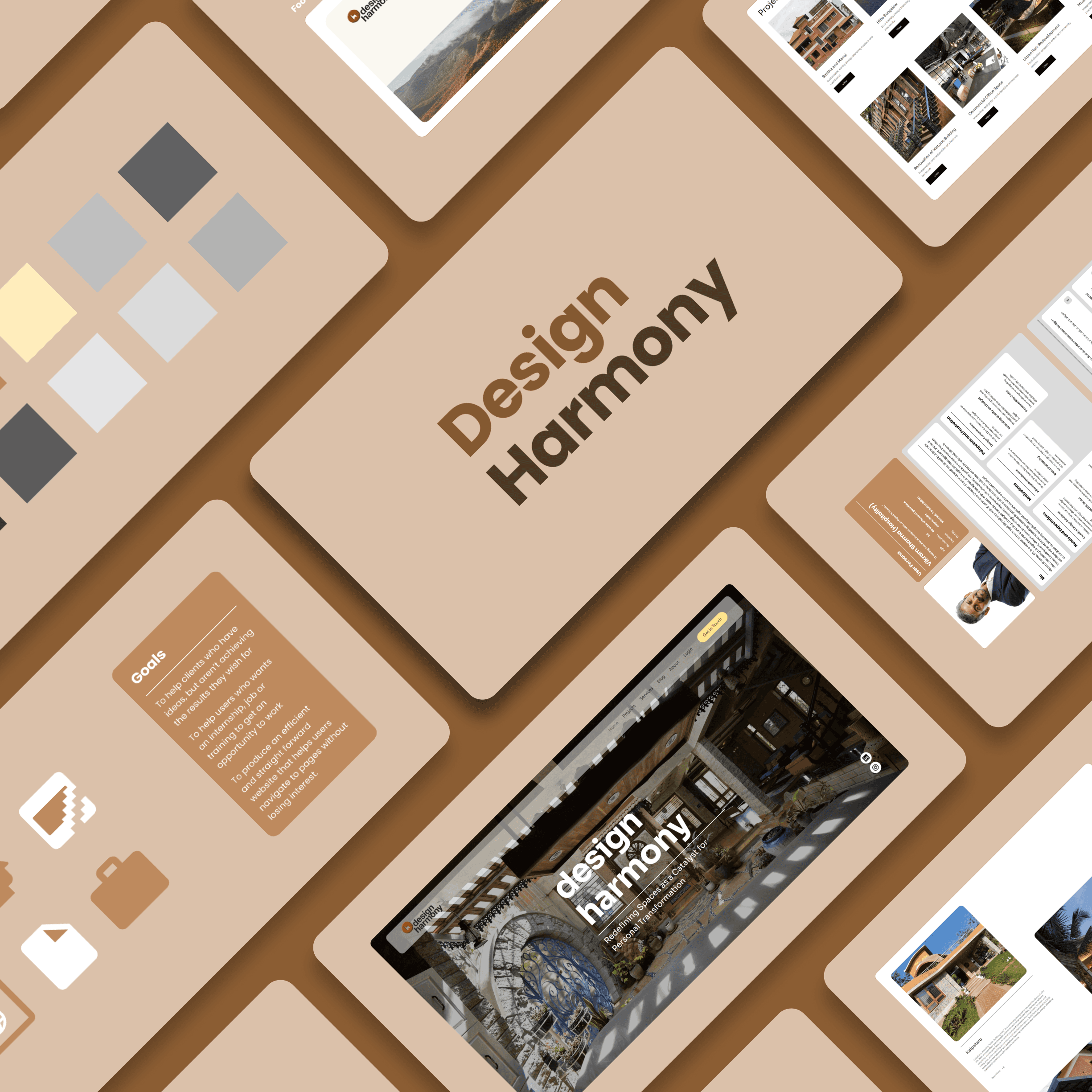
The goal of this project was to create an architecture website for Design Harmony to attract more traffic, generate more clients, and create job opportunities. The website needed to be efficient, straightforward, and easy to navigate to help users access information without losing interest. The project duration was two months.
My Approach
I initiated the project by conducting a discovery and research phase where I performed group studies and user research to understand the users' pain points and design requirements. This process helped identify key user personas such as Vijay Kumar, a self-taught electrician looking for larger projects, Vikram Sharma, a hospitality director in need of cost-effective designs, and Arjun Mehta, a final-year architecture student seeking internships. Understanding the needs, expectations, and challenges faced by these personas shaped the design direction of the website.
Vision and Innovation
The vision behind the website design was to create a seamless user experience that addressed the specific needs of users, whether they were potential clients or aspiring architects. The website aimed to blend efficiency with aesthetic appeal, providing an innovative platform for job opportunities, client engagements, and showcasing Design Harmony’s portfolio. The design emphasized clarity, easy navigation, and project visibility for both high-end and budget-conscious users.
Resolving Complex Problems
To resolve these challenges, I incorporated clear navigation, tailored sections, and content organization. I focused on simplifying the navigation experience by ensuring that relevant information for each user group was easy to find. For instance, I created specific sections for internships and job opportunities, ensuring that users like Arjun could quickly access relevant information without feeling overwhelmed by the portfolio content. Meanwhile, Vijay's pain points of limited visibility were addressed through more prominent client-focused sections showcasing real-world applications and opportunities.
User-Centric Design
The website was designed with a user-centric approach, ensuring that every feature catered to the needs of the users. For clients like Vikram Sharma, the design included detailed case studies of budget-conscious projects. For students like Arjun Mehta, the internship sections were clear and easy to navigate, providing all the necessary details to apply for opportunities. I also incorporated easy access to client testimonials and project showcases, ensuring users could see Design Harmony’s work and engage with it easily.
Meeting User Needs
Through research and user personas, I identified specific needs such as project visibility for contractors, clear internship pathways for students, and budget-conscious design solutions for clients. The website provided solutions by clearly differentiating between the user groups and providing intuitive navigation pathways. Users could easily find what they were looking for, whether it was services, contact information, or project examples, without unnecessary steps.
Conclusion
The architecture website for Design Harmony was a successful project that achieved its objectives of attracting more traffic, creating job opportunities, and helping users navigate the site with ease. By focusing on the needs of different user groups and overcoming the challenges of complex navigation, the website became a user-friendly platform that aligned with Design Harmony’s mission of delivering high-quality architecture services while being accessible to a wide range of users.